Recycling and Sustainability for Landscapers Ilford
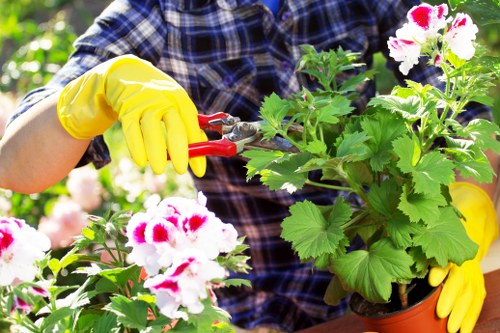 Landscapers Ilford is committed to a cleaner, greener approach to outdoor work, with eco-friendly waste disposal built into every project. From garden clearances to turf removals and seasonal maintenance, our team focuses on sustainable rubbish handling that supports local recycling systems and reduces unnecessary landfill. By planning waste streams carefully, we help keep reusable materials in circulation and ensure green waste, timber, soil, and inert rubble are directed to the most suitable facilities.
Our recycling process is designed around a practical recovery-first approach. That means separating materials at source whenever possible, sorting loads by material type, and prioritising reuse before disposal. In a busy urban area like Ilford, this matters because efficient sorting reduces contamination and improves the quality of recyclable material. We work with a recycling percentage target of at least 85% diversion from landfill on suitable landscaping waste, with a focus on compostable organics, recyclable wood, metals, plastics, and clean soil.
 As part of our sustainability commitment, Landscapers Ilford supports local transfer stations that specialise in responsible materials handling. These facilities help process green waste, hardcore, branches, and soil in line with current environmental standards. By using approved transfer stations, we can route loads to the correct recovery stream and reduce long-haul transport. This also supports a more efficient rubbish recycling area approach, where waste is separated, weighed, and directed to the appropriate recovery or reuse channel.
We also keep a close eye on borough-level waste separation practices, since local expectations can vary across east London. In many nearby boroughs, residents and businesses are encouraged to separate garden waste, mixed recyclables, and general rubbish carefully, and that same principle applies to landscaping work. Our team follows this kind of structured sorting on site and off site, especially for common landscaping materials such as branches, hedge cuttings, leaf litter, topsoil, old sleepers, paving offcuts, and packaging from delivered materials.
Recycling in landscaping is not only about disposal; it is also about reuse. Whenever suitable, stone, timber, and clean aggregates may be recovered for secondary use, while green waste can be chipped or composted through licensed channels. We also handle the sort of waste often generated by garden transformations, including broken fencing, shed timber, old plant pots, and metal fixings. By making these processes part of our standard workflow, Landscapers Ilford helps reduce the volume of mixed waste sent to landfill.
 A key part of our sustainability strategy is the use of low-carbon vans. These vehicles help reduce emissions during collections, site visits, and material transfers, supporting a lower-impact service from start to finish. We plan routes to reduce unnecessary mileage and combine loads where practical, which cuts fuel use and helps keep our carbon footprint down. For eco-conscious customers, this is an important part of choosing a green landscaping waste solution that aligns with wider environmental goals.
Partnerships with charities are another important part of our recycling and sustainability page. Where suitable items are recovered from landscaping jobs, we aim to identify opportunities for donation through local charities or community reuse groups. Items such as usable timber, plant containers, outdoor fixtures, and gently used materials may be diverted for charitable reuse rather than disposed of. This supports community projects, extends the life of materials, and creates a more responsible sustainable rubbish pathway.
We also recognise that some materials require special handling. Soil contaminated with non-organic debris, treated timber, certain plastics, and mixed construction waste must be separated carefully before onward transfer. Our team uses clear sorting methods to reduce cross-contamination and improve recycling rates. In practical terms, that means keeping green waste apart from inert waste, and separating recyclable metals and clean wood from general rubbish. This approach reflects the cleaner waste separation habits increasingly seen across boroughs in and around Ilford.
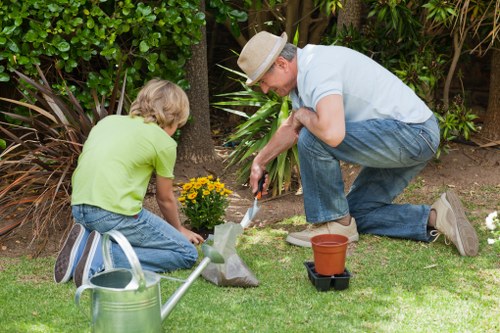 Low-carbon operations and responsible waste routing go hand in hand. By choosing transfer stations close to the work area and using efficient load planning, we reduce the environmental cost of each project. In many landscaping jobs, this can make a significant difference, especially when multiple waste types are involved. Our commitment to sustainability is not a single action but a repeatable process that includes on-site separation, recovery-focused disposal, and careful material selection from the outset.
For larger clearance or renovation work, we aim to keep recyclable streams as clean as possible. That includes collecting green cuttings separately from soil, storing rubble away from organics, and ensuring reusable materials are not mixed with non-recoverable waste. This improves the chances of recycling and supports a cleaner eco-friendly waste disposal chain. It also helps our partners at local transfer stations process the load more efficiently, which can improve overall recovery outcomes.
We encourage a circular approach to landscaping wherever possible. Mulch can be created from chipped branches, compostable green waste can return to the soil chain, and some hard landscaping materials may be repurposed for future projects. These steps reduce demand for virgin resources and help make each project more sustainable. For customers seeking Landscapers Ilford recycling services, this means a more responsible balance between performance, appearance, and environmental care.
 Our goal is to keep improving across every stage of the job. By maintaining an 85% recycling target, supporting charities, using low-carbon vans, and working with licensed local transfer stations, Landscapers Ilford offers a practical sustainability model for garden and landscape waste. Whether the task involves pruning, clearance, redesign, or seasonal tidy-up, our sustainable rubbish area focus ensures waste is managed with care, traceability, and respect for the environment.

